Uncapped 100% income-tax exemption.
Meal-card tax advantages apply only up to a daily limit. Company-funded meals served at the workplace have no daily amount cap.
Meal marketplace and management platform for companies
Employees choose their meals; the caterer prepares and delivers them to the workplace. iştebu! brings choices, invoices, and feedback together in one place.
Our app is available on web, iOS, and Android.
Keep your current caterer or choose a new partner through the marketplace.
Your meal program, in three steps
An alternative to meal cards
Meal-card tax advantages apply only up to a daily limit. Company-funded meals served at the workplace have no daily amount cap.
Each employee chooses the meal they want, and those choices combine into one planned order. Group purchasing replaces individual retail pricing and lowers the price per person.
A real price example
This is one example for the same meat-based menu and portion from the same caterer; it is not a fixed price. Price depends on the chosen menu.
See the product
Employees choose and rate lunch; managers track counts, budget, invoices, and feedback in the same system.
01
Track daily participation, purchased meals, billing periods, and employee feedback.
02
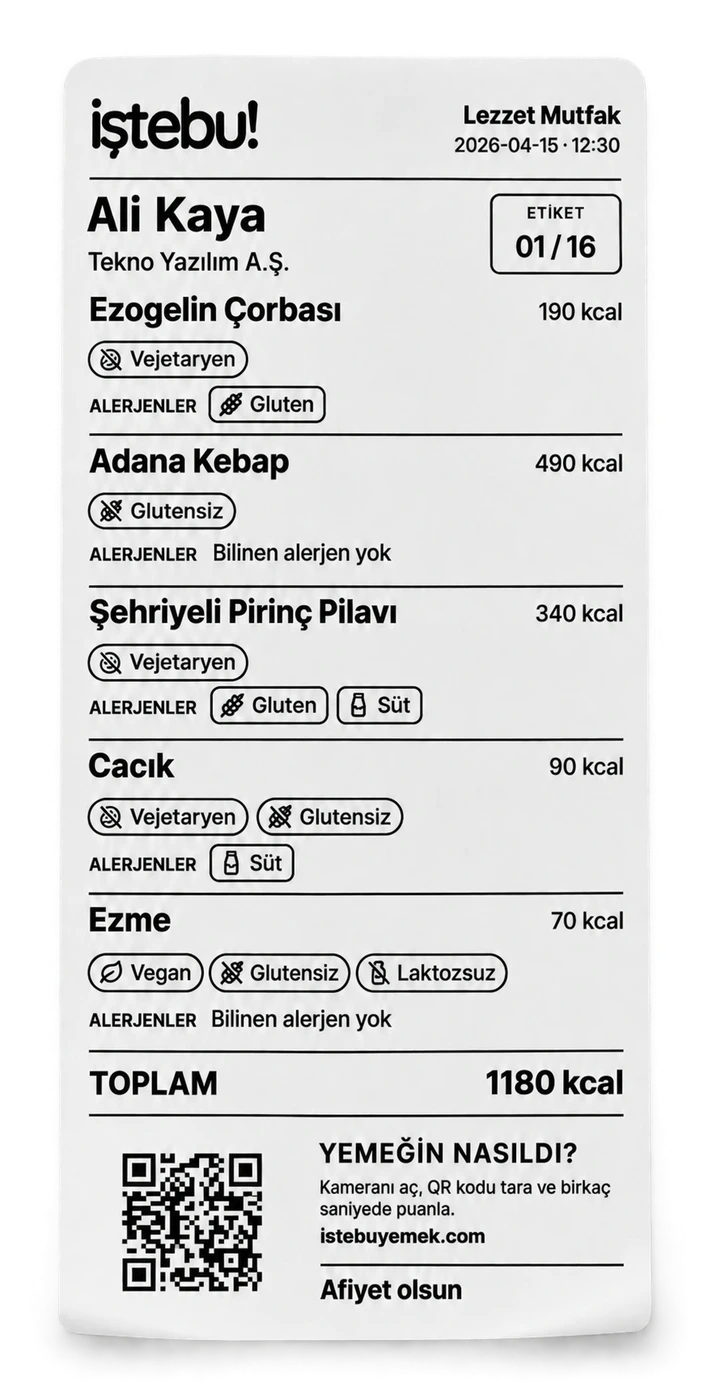
Review the meal photo, allergens, calorie information, dietary preferences, and special-content labels, then choose for today and upcoming days.
03
Rating and comment trends show the company and caterer where to focus.
The demo environment opens in a new tab.
Meal marketplace and daily management
Keep your current caterer or choose a new partner through the marketplace. iştebu! does not disappear after the introduction; it keeps menus, deliveries, invoices, and feedback in one daily workflow.
Your employee app and management setup stay the same even when the caterer changes.
You already have a caterer
Start managing menus, employee choices, daily counts, invoices, and feedback in one place.
You use meal cards
Plan the move to group meals around your team, location, and working pattern.
You are starting from scratch
Do not build a new WhatsApp-and-spreadsheet process for invitations, choices, deliveries, invoices, and feedback.
Packaging and delivery
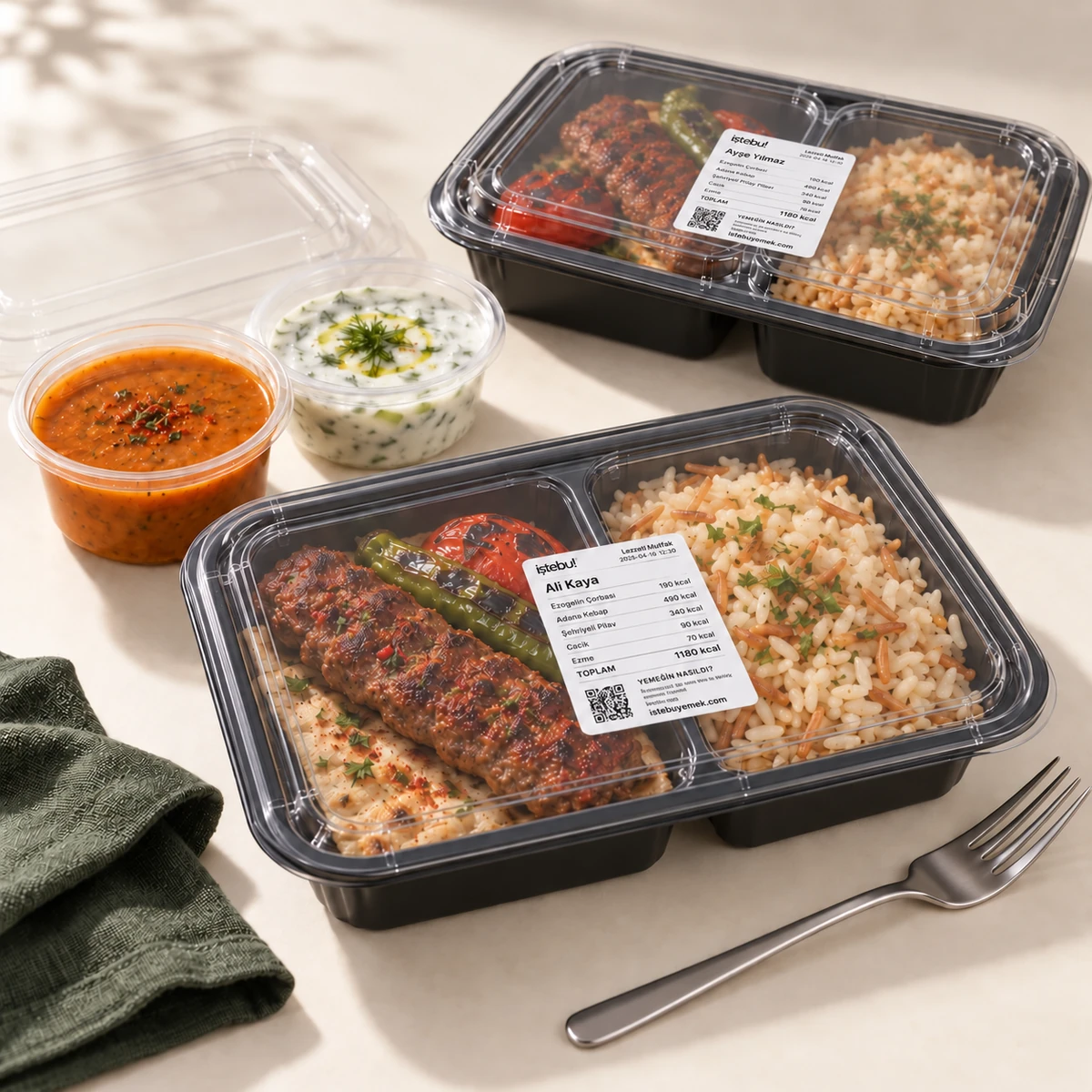
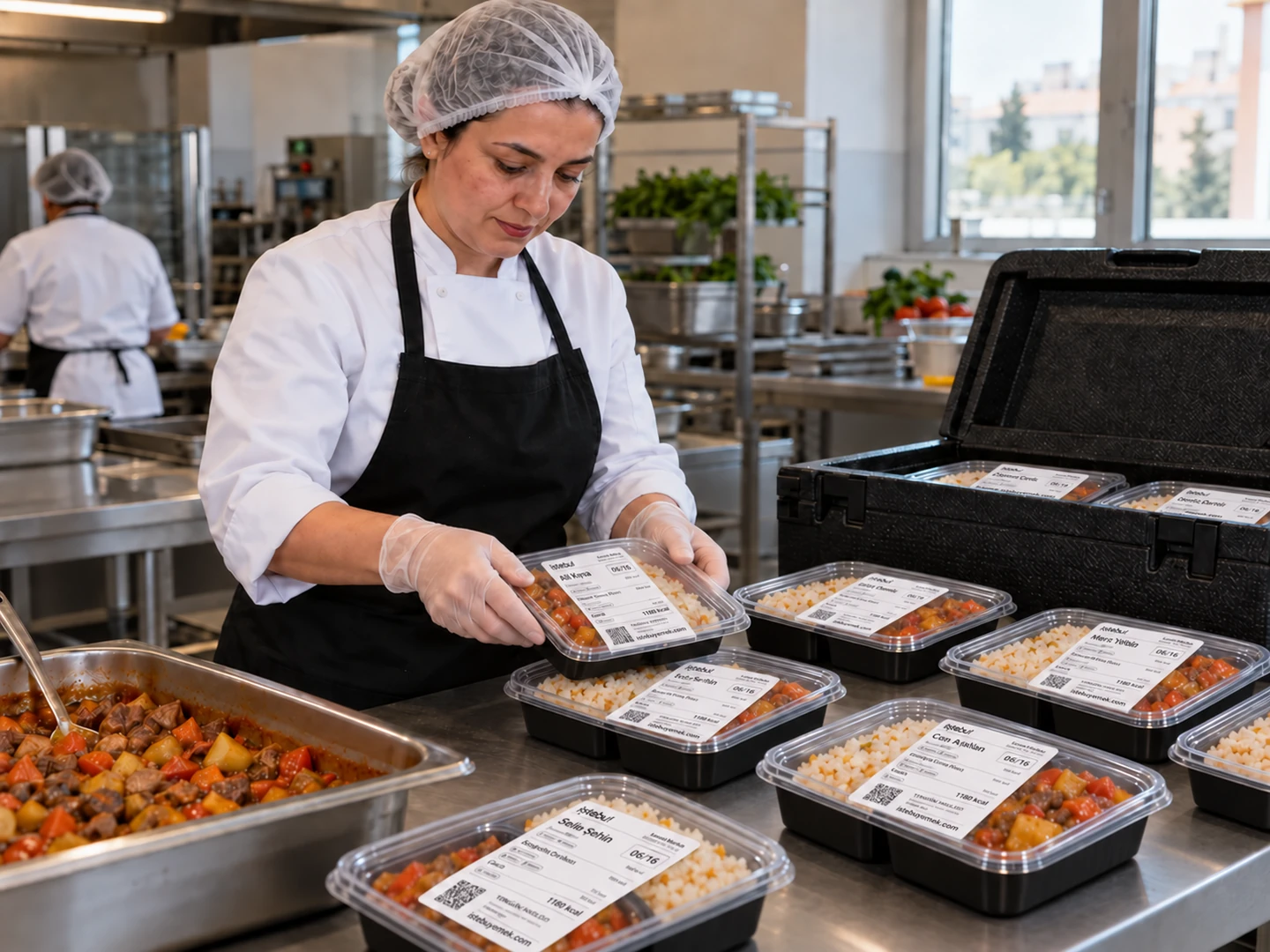
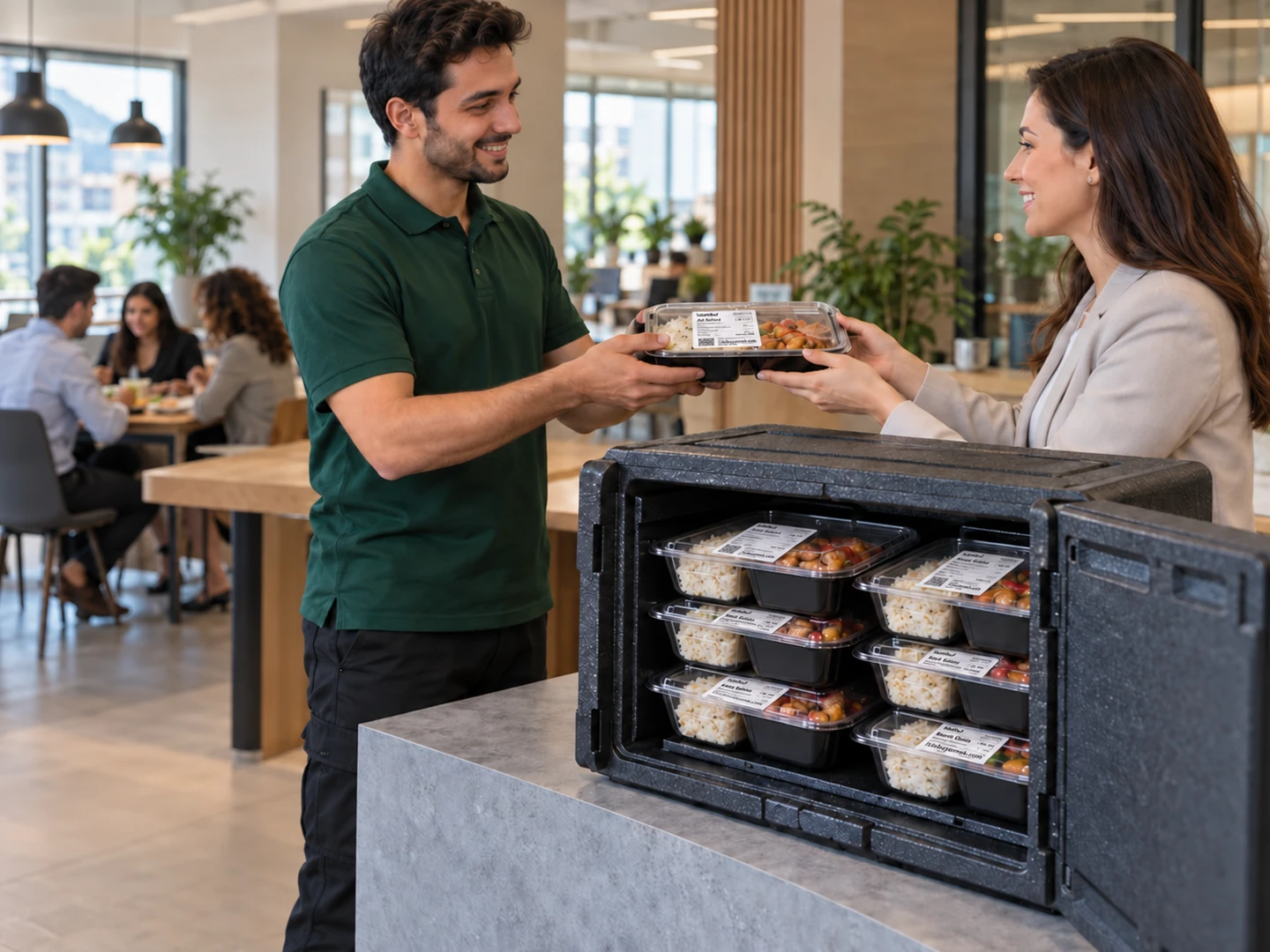
Your caterer packs each meal in a separate microwave-ready container labeled with the employee’s name and selected menu. The meals travel together to the workplace in insulated Thermobox carriers; anyone who prefers can reheat theirs later.
Your caterer prepares and delivers the food. iştebu! is the platform that brings meal choice, ordering, and delivery tracking into one flow.
Detailed comparison
Compare employee choice, delivery, daily operations, feedback, and tax treatment side by side.
Every model has strengths and limitations. Common arrangements are shown; features vary by provider and contract.
| Criteria | Meal cards | Traditional catering | iştebu! |
|---|---|---|---|
| Employee choice | Employees choose their restaurant and meal | A fixed daily menu is most common | Employees choose the meal they want from the contracted caterer’s options |
| How the meal arrives | Employees travel or place an individual order | Meals arrive together at work | Name-labeled, microwave-ready individual containers arrive together |
| Daily operations | The company loads balances; employees manage their own meal | Counts and changes are tracked between the company and caterer | Choices, cancellations, and final counts are collected automatically |
| What the company sees | Balance and spend | Total count and invoice | Meal count, budget, invoices, and feedback |
| Feedback | Feedback goes to the restaurant or ordering app; the company cannot see satisfaction across the team. | Feedback is usually shared only when there is a serious issue; employees do not have a regular line to the kitchen. | After every meal, rating and commenting is easy; employee feedback reaches the kitchen and helps improve the food. |
| Cost model | Individual retail spending | Batch-production price | Planned batch production that preserves employee choice |
| Income-tax exemption | 100% income-tax exemption up to TRY 330 per working day in 2026* | 100% income-tax exemption with no amount cap when company-funded and served at the workplace | 100% income-tax exemption with no amount cap when company-funded and served at the workplace |
Practical answers on meal cards, current caterers, billing, and employee experience.
Yes. Your current caterer can join iştebu! and continue serving your company. At onboarding, it uploads its tax certificate and Food Business Registration Certificate; the authorized review team compares the entered details with those documents. Daily selections, meal counts, delivery tracking, invoice reconciliation, and collection then run through iştebu!
Yes, it is an alternative workplace-lunch line to meal cards. No card, wallet, balance, or payment instrument is issued to employees. Lunch comes to the workplace, and employees only make selections in the app. For the company, daily headcount gathering, WhatsApp/Excel chasing, restaurant calls, and invoice reconciliation move into one platform flow. Payroll, SGK, and tax effects should be confirmed with the company's own accountant.
In most companies, lunch coordination means daily headcount chasing, WhatsApp/Excel tracking, delivery checks, and invoice reconciliation. With iştebu!, employee selections are captured in the platform; headcount, menu, deadlines, delivery, and monthly reconciliation are visible in one panel. The admin works on exceptions, approvals, and service quality rather than daily chasing.
Under the intermediation model, the food-service invoice is issued by the relevant caterer to the company. iştebu! does not resell the meal service or issue the food invoice to the company. Under the platform terms and the caterer's collection authorization, iştebu! may collect payment from the company; that payment settles the company's debt to the relevant caterer. iştebu! earns its revenue through the intermediation/service-fee invoice it issues to the caterer. The company sees one reconciliation and payment process.
Before the deadline, employee selections and bulk orders can be updated. After the deadline, changes affect production and may not be accepted automatically in the platform; iştebu! and the caterer may need to confirm them manually.
The agreement has no fixed term. The company may terminate it with 30 days' written notice; that notice period does not apply to termination for cause. Days whose selection deadline has not passed are cancelled. Days past the deadline may still be delivered and included in invoice reconciliation because production has started. Past invoice, collection, and dispute records are retained for the legally required periods.
iştebu!
For your company
Let’s review your current meal-card or catering setup, compare costs for your company, and show you the choice, delivery, and management flow in the product.
We reply the same day.